It's been one of the wettest summers on record here in the Upper Mississippi River Valley and the Fall season is following the same path. Last week the Upper Mississippi River Valley experienced some strong thunderstorms that dropped rain amounts ranging from 3 inches to as much as 10 inches in some locations. The creeks and rivers are all overflowing their banks and flooding some small towns and creating devastation everywhere. All these smaller rivers empty out into the Mississippi River causing it now to exceed flood stages in our area from Red Wing,MN to Prairie Du Chein,WI. River stages are expected to range from 13ft. to 20ft. In Port of La Crosse the flood stage is 12ft. and the Mississippi River is suppose to reach 13.5ft. by Wednesday and crest Thursday which means the Mississippi River levels should start to go down. The weather forecast is predicting dry weather for several days so that should help the lowering process and give residents a chance to start to clean up.
Here at Port of La Crosse Houseboating Excursions is unable to reach our houseboat. All boating residences had to be evacuated because the Mississippi River levels are getting so high it flooded the access road to the marina and all the surrounding land. Check out our photos we took when we left and the Mississippi River is suppose to go 1.5ft. higher than these photos show.
Also in these photos you see how people are getting around to clear out and the Harbormaster and his crew cruise the area continually clearing the the marina of large floating debris to prevent damage to boats and docks, they are also checking to make sure everything is secure and safe. The Pettibone Campground is also under water and residents were forced to evacuate and move their campers to high ground and some have set up camp in nearby parking lots. The Mississippi River is very dangerous to cruise at this time even the commercial barges are forced to stay at port because navigating is very difficult. The US Army Corps of Engineers is asking everyone to stay off the Mississippi River until levels fall below flood stage and if you must go cruise the Mississippi River a mandatory NO WAKE is in force until water levels fall below 10ft. With all the debris floating in the river right now you will be running the risk of hitting something you can't see just under the surface and possibly destroying your boat and motor. If you must venture out on The Mississippi River please do so safely and cautiously.
Continue to follow Houseboating Excursions in the Mississippi River Valley as we cruise and explore more destinations and provide more information, adventures, and resources. Please Don't Move Firewood and Help Stop Aquatic Hitchhikers.
Showing posts with label safety. Show all posts
Showing posts with label safety. Show all posts
Monday, September 27, 2010


Friday, January 22, 2010
Help Stop Aquatic Invaders
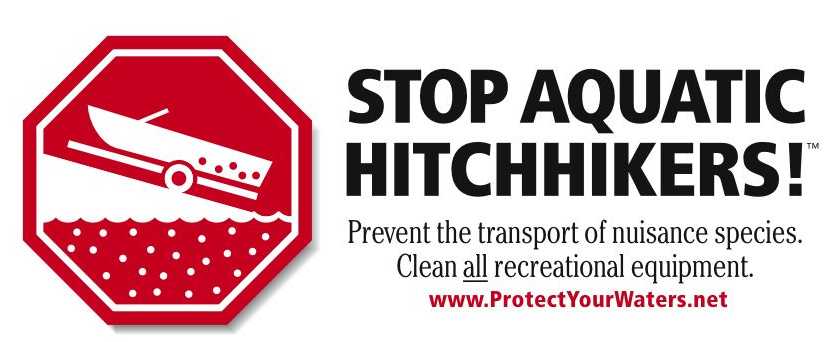
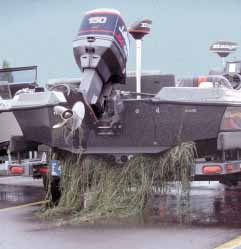
Enjoying the great outdoors is a privilege and important to many of us. Boating, fishing, hunting, and watching wildlife are activities that we want to preserve for our children and their chidren. Due to aquatic invaders these wonderful activites are at risk. There are currently national campaigns that help recreational users become part of the solution in stopping the transport and spread of aquatic invasive species.
One national campaign is called "Stop Aquatic Hitchhikers!". It is sponsored by the US Fish and Wildlife Service and the US Coast Guard. They offer eductional programs to inform us of the different invasive species such as round goby, zebra mussels, purple loosestrife, eurasion watermilfoil, bighead and silver carp, and New Zealand mudsnail. These and other non-native plants and animals will cause ecological or economic problems. The main way they get into lakes, rivers,and wetlands is by "hitching" rides with fishermen, boaters and other outdoor recreationalists. These invasive species are capable of doing irreparable harm to our lakes, rivers, and wetlands. The good news is that the majority of waters are not yet infested with invasive species and we can all help protect our waters. In many states it is illegal to transport invasive species and can lead to a citation, for the first offense it's about $180.00, and $250.00 for the second offense.
Actions to take to prevent the spreading are:
1. INSPECT your boat, trailer, and equipment and REMOVE all visible aquatic plants, animals, and mud before leaving the water access.
2. DRAIN water from your boat, motor, and live wells of all types before leaving the water access.
3. REPORT any sighting of an aquatic plant or animal if your suspect it is a new infestation of an invasive plant or animal, and report it to a local natural resouces department. In Wisconsin it's the WDNR, Minnesota- MNDNR, and Iowa- IADNR.
4. DISPOSE of all unwanted bait and aquatic plants in the trash.
5. SPRAY, RINSE and DRY boats and recreational equipment to remove or kill invaders that were not visible when leaving the water before going to another waterway.
6. CONSULT your local natural resource agency if you have questions about controlling these invaders and they can provide you with recommendations for cleaning solutions and what permits might be required.
Join Houseboating Excursions in the Mississippi River Valley in the fight against these invasive species so we can all enjoy the outdoors for years to come.
Continue to follow Houseboating Excursions in the Mississippi River Valley as we cruise and explore more stops along the Mississippi River and provide more information.
Tuesday, January 5, 2010
Mississippi River Lock and Dams
Cruising the Mississippi River is an unique and enjoyable experience, there is so much to see and do including going through a Mississippi River Lock and Dam. The US Army Corps of Engineers maintain and operate the lock and dams. It was in the 1930s that Congress gave permission and a money grant to the Army Corps of Engineers to go ahead and build the lock and dams you see today. From Minneapolis,MN to St. Louis MO there are 29 lock and dams to go through. The majority of the locks are 100 feet wide, which is wide enough for a double-wide barge. Only the three upper most locks are 56 feet wide and require the barges to break down to a single-wide which is very time consuming and costly. There has been some talk among our local senators to grant money for expansion but it is estimated to cost around $2 billion to do it. The locks and dams were built primarily for navigational purposes and not to control flooding along the Mississippi River, they try to maintain a 9 foot depth in the the main channel for easy passage.
When approaching a lock and dam there is a procedure that must be followed. First, upon approach you will see the lock is closed, this could mean someone is coming through or just in waiting. Along side the wall at the beginning of the dam you will see a sign that says "Signal Rope"
 just proceed up to it and give it a tug and a signal goes off in the tower where the lockmaster is informing him/her of your presence, you may also call them on the CB Radio on channel 14. Secondly, look up at a set of lights that look like stoplights, if it is red, someone is locking through and you must wait, yellow means the gates are getting ready to open, green means the gates are open and it is clear to proceed. Thirdly, approach at a slow speed, it is NO WAKE, and proceed up into the holding area far enough so other boats can also get in, you will see many ropes hanging alongside the wall, you need to grab a hold of one so you don't float around in the holding area. Fourth, when all the boats are in the holding area the gates will close and depending which direction you are traveling the water will rise(going down river) or fall(going up river).
 Be sure not to tie the rope to your boat it will be disastrous, just hold it. Fifth, when the holding area reaches the proper water level the gates will open and you must wait till you hear a loud horn go off and that is the signal it is OK to exit the holding area and proceed to your destination.
If you are interested in touring a Mississippi River Lock and Dam just click on the above link and then choose the Lock and Dam number of your choice and it will give you the the contact person and phone number to call. Also to see some additional beautiful photos of the different Locks and Dams click this link LOCKS and DAMS.
Continue to follow Houseboating Excursions in the Mississippi River Valley as we explore more cruise stops, events and provide more information.
When approaching a lock and dam there is a procedure that must be followed. First, upon approach you will see the lock is closed, this could mean someone is coming through or just in waiting. Along side the wall at the beginning of the dam you will see a sign that says "Signal Rope"

 just proceed up to it and give it a tug and a signal goes off in the tower where the lockmaster is informing him/her of your presence, you may also call them on the CB Radio on channel 14. Secondly, look up at a set of lights that look like stoplights, if it is red, someone is locking through and you must wait, yellow means the gates are getting ready to open, green means the gates are open and it is clear to proceed. Thirdly, approach at a slow speed, it is NO WAKE, and proceed up into the holding area far enough so other boats can also get in, you will see many ropes hanging alongside the wall, you need to grab a hold of one so you don't float around in the holding area. Fourth, when all the boats are in the holding area the gates will close and depending which direction you are traveling the water will rise(going down river) or fall(going up river).
 Be sure not to tie the rope to your boat it will be disastrous, just hold it. Fifth, when the holding area reaches the proper water level the gates will open and you must wait till you hear a loud horn go off and that is the signal it is OK to exit the holding area and proceed to your destination.
If you are interested in touring a Mississippi River Lock and Dam just click on the above link and then choose the Lock and Dam number of your choice and it will give you the the contact person and phone number to call. Also to see some additional beautiful photos of the different Locks and Dams click this link LOCKS and DAMS.
Continue to follow Houseboating Excursions in the Mississippi River Valley as we explore more cruise stops, events and provide more information.
Saturday, August 15, 2009
Dog Days of Summer
The month of August is always referred to as the Dog Days of Summer which means hot temperatures with high humidity. Houseboating Excursions in the Mississippi River Valley is reminding everyone of the dangers of Heat Illnesses and Heat Stress Disorders. When out on the river it is easy to overlook these dangers when having a good time.
Statistics show that more than 300 people in the United States alone die from Heat Illnesses every year. These illnesses cause more deaths than hurricanes, tornados, lightning, and floods combined. The elderly and young children are at the highest risk. Heat Illnesses occur when the body is unable to cool itself properly. Sweating is the body's normal way of cooling itself, but when the humidity is too high the sweat is unable to evaporate, preventing the body from releasing the heat. Other conditions leading to high risk of a heat illness are obesity, fever, dehydration, heart disease, sunburn, drug use and alcohol consumption. Heat stroke may occur when the body is unable to regulate its temperature. Body temperature may rise to 106 degrees within just 10 minutes. The result of heat stroke can leave disabilities or even death. Heat Exhaustion is a milder illness that can occur over several days of high heat exposure and an unbalance of hydrating liquids. If left untreated, it could lead to stroke.
Warning Signs to look for when it comes to Heat Illnesses are: extreme body temperature increase to above 103 degress; red, hot or dry skin and no sweating, a throbbing headache, unconsciousness, dizziness, nausea, and confusion. For Heat Exhaustion look for heavy sweating, muscle cramps, fainting and a headache.
A few ways to managing extreme heat conditions would be to as Koal and George are doing and cool off with a swim in the river. Go to a nearby public swimming pool or take cool baths or showers. Drink plenty of WATER and stay away from drinks that have caffeine, sugar, or alcohol. Try to avoid drinking very cold drinks because they may create stomach cramps. If possible stay indoors of a building that has air conditioning, even though electric fans are good, they won't prevent a heat illness.
Come follow Houseboating Excursions in the Mississippi River Valley as we continue to provide information and explore more cruise stops.
Monday, July 20, 2009
River Markers- What Do They Mean?


As you are cruising along the Mississippi River you will notice there are many different kinds of markers on the waterways. What do they all mean? These are very important navigational tools that direct traffic on the waterways in a safe and organized manner. You will see red and green buoys on either side of the (in our case) the Mississippi River. These buoys indicate where the main river channel is and this is the safest place to travel up and down the river. You will always see green on one side and red on the other. As you travel down river always keep the green on your right and red on your left and when traveling up river you would keep the red on your right and green on your left. If you venture outside of these areas you run the risk of hitting an underwater object that could damage your boat. That is why always take precaution when leaving the channel and heading to a sandbar, approach slow and with the motor(s) slight raised up for clearance.
You will sometimes see numbers on some of these markers along the river. These numbers are mile markers which indicate where you are on the river, just like you would see along the interstate highway, in case you should need to call for the US Coast Guard or other emergency personnel.
You will in some areas see small white buoys with orange symbols and black lettering. These are navigational aids that give information other than the borders of safe waterways. The most common ones you encounter on the river are the SLOW NO WAKE buoys. These have circles which indicate a controlled area which means to slow down to just above idle speed as to not create a wake(wave). These are generally found in an areas that may be narrow, housing, boat launching sites, or high erosion potential. These areas are determined with all the combined efforts of the DNR, US Fish and Wildlife, US Army Corps of Engineers,US Coast Guard and local officials.
As you are cruising along the beautiful Mississippi River keep an eye out for these markers and respect what they mean; safe boating is fun boating.
Subscribe to:
Posts (Atom)